The Ultimate Google E-E-A-T Guide: Boost Your Rankings
Need to improve your site's SEO? Learn how to master Google E-E-A-T. Discover practical tips to build trust, expertise, and rank higher today!


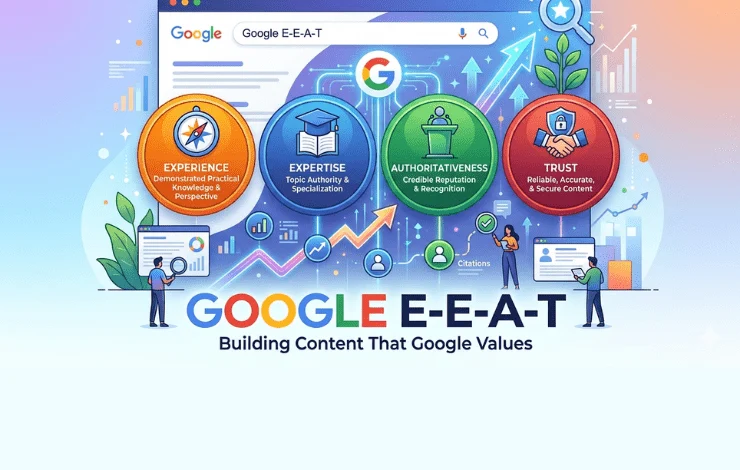
If you own a website, you probably know how important it is to rank well on search engines. Google uses a concept called E-E-A-T to find high-quality, helpful, and trustworthy web pages for its users.
Here is everything you need to know about E-E-A-T and how to use it to improve your Search Engine Optimization (SEO).
1. What is Google E-E-A-T?
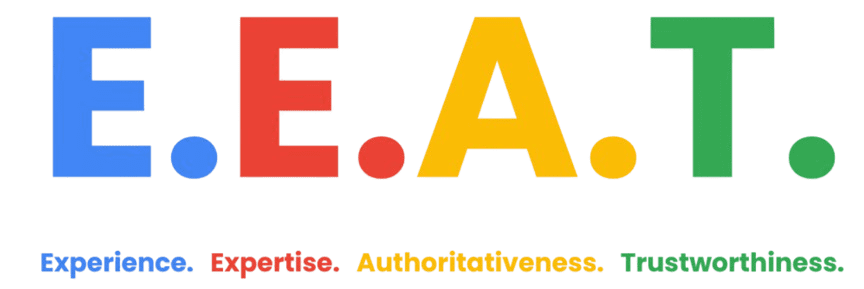
In 2022, Google updated its search guidelines by adding a new letter, “E” (Experience), to the old “E-A-T” formula. Today, the acronym stands for:
-
Experience
-
Expertise
-
Authoritativeness
-
Trustworthiness

Why is it important for YMYL websites?
E-E-A-T is critical for YMYL websites. YMYL stands for “Your Money or Your Life.” These are websites that give advice on topics like health, finance, online shopping, or law. Because this information can deeply impact a reader’s life, Google wants to ensure these sites are safe and honest.
What is the “Experience” factor?
Google prefers content created by people with real-world experience. For example, if you write a product review, Google wants to know if you actually used the product. If you write a travel blog, did you actually visit the place? First-hand experience makes your content unique and valuable.
2. How Google Evaluates E-E-A-T
E-E-A-T is not a single SEO score or a direct ranking factor. Instead, Google uses automated systems to look for various signals on your website. These signals help Google’s Natural Language Processing (NLP) systems understand if your content is reliable.
-
Trust and Transparency: You must show who created the content and why.
-
Content Quality: Google lowers the rank of pages with low-quality, copied, or misleading information.
-
Relevance: E-E-A-T applies to all types of content, from news articles to online stores.
3. The 4 Elements of E-E-A-T
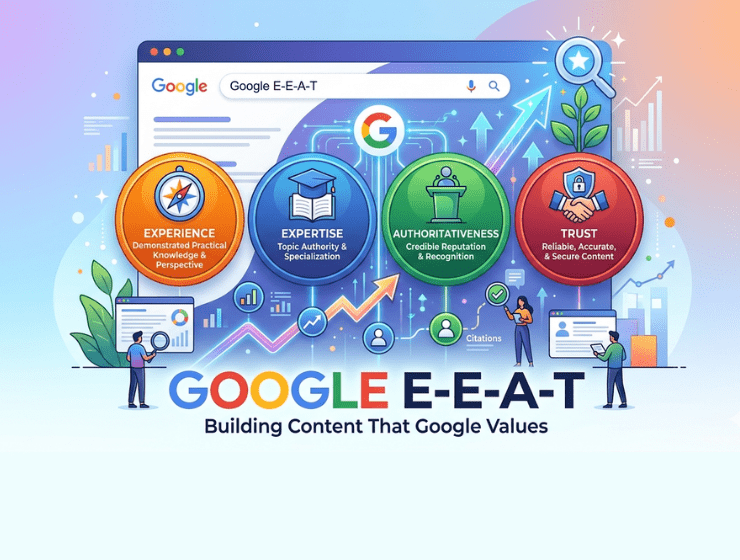
Google hires real people called Search Quality Raters to review websites and grade them based on these four elements:
-
Experience: Does the writer have personal, hands-on experience with the topic?
-
Expertise: Does the writer have the formal knowledge, education, or credentials to discuss the topic?
-
Authoritativeness: Is the website or author a well-known, go-to source in their industry?
-
Trustworthiness: Is the website safe, secure, and accurate?
| Element | What Google Looks For | Example for a Tech/Web Site |
| Experience | Personal, hands-on involvement with the topic. | “I tested this specific WordPress plugin on my own site for three weeks.” |
| Expertise | Professional knowledge, skills, or credentials. | A certified web developer or software engineer writing a coding tutorial. |
| Authoritativeness | Reputation as a trusted, go-to source in the industry. | Other respected tech blogs and experts link to your articles as a resource. |
| Trustworthiness | The safety, honesty, and accuracy of the website. | Secure HTTPS connection, clear refund policies, and honest product reviews. |
Note by Algorithm Man: Google considers Trustworthiness the most critical part of the E-E-A-T framework. If a site is not trustworthy, the other three elements do not matter.
4. Who Needs to Focus on E-E-A-T?
Every website should focus on E-E-A-T to rank higher in search results. However, if your website offers medical advice, financial tips, or legal help, E-E-A-T is a necessity. High E-E-A-T signals protect your users and help your site stay visible online.
5. How E-E-A-T Affects Your Search Rankings
While E-E-A-T is not a direct mathematical factor like page speed, Google’s algorithms are designed to reward high-E-E-A-T content. If a website lacks trust, Google’s systems will filter it out of top search results to protect users from bad information.
6. Key Tips to Improve Your E-E-A-T
To optimize your content for Google’s search systems, follow these best practices:
Show Your Expertise
-
Write detailed, accurate content that answers user questions completely.
-
If you write about complex topics like taxes or health, ensure the content is written or reviewed by certified professionals.
Build Trust (Reliability)
-
Always verify your facts and statistics.
-
Link out to respected, high-quality sources (like government sites or major studies).
-
Use clear language and avoid exaggerated titles (clickbait).
Grow Your Authority
-
Get mentions and links from other famous websites in your industry.
-
Share your content on social media and build a strong brand reputation.
You may also like this 👉 What Is SEO? Types, Tools, Process & Hidden Risks
7. The Importance of “About Us” and “Contact” Pages
Transparency is essential for trust. Your website must clearly state who runs it.
-
Create a detailed About Us page to explain your mission, history, and team.
-
Create a Contact page with real contact information, like an email address, phone number, or physical location.
8. Use Schema Markup for Better NLU
Schema markup (structured data) helps search engines understand the meaning behind your text. By using Schema code, you can explicitly tell Google’s Natural Language Understanding (NLU) systems:
-
Who the Author of the article is.
-
What Organization owns the website.
-
The awards or credentials of your brand.
This helps Google connect your content to trusted entities on the web.
9. What Hurts Your E-E-A-T?
Avoid these common mistakes to keep your rankings safe:
-
Low-quality backlinks: Avoid buying links or getting links from spammy websites.
-
Thin content: Do not publish short, unhelpful articles or copy text from other websites.
-
No author information: Always add an author bio with links to their social media profiles or professional website.
-
Outdated information: Review your old articles regularly and update them with new facts.
Building strong E-E-A-T takes time, but it is one of the best ways to improve your long-term SEO. By creating high-quality content, showing your real-world experience, and helping search engines understand your website, you can achieve higher rankings and win the trust of your audience.
To ensure the highest standards for our readers, this guide is based on Google’s official guidelines for creating helpful content.”
You may also like this 👉 What Is Local SEO?